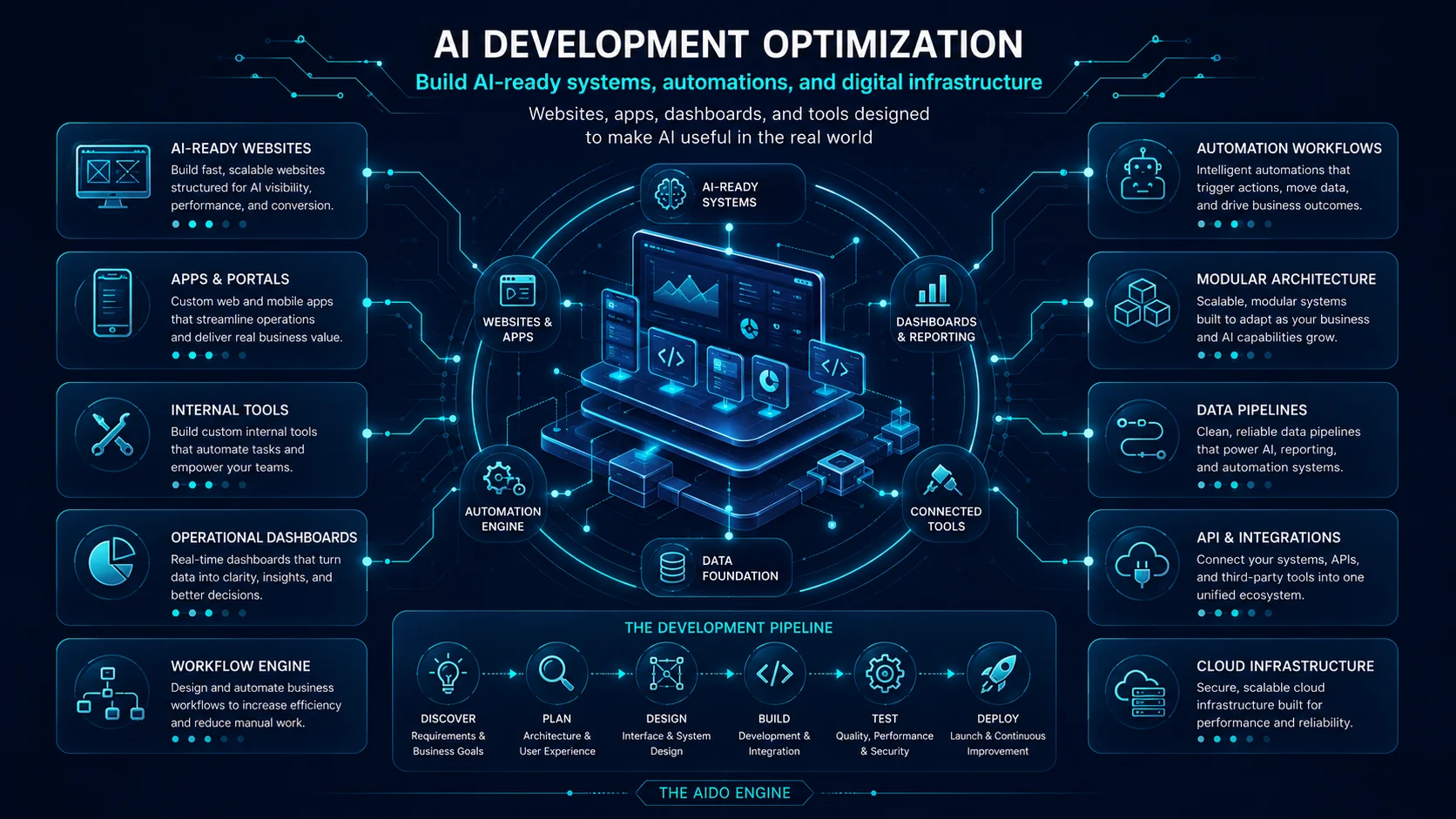
Websites, portals, dashboards, automations, integrations, and AI-enabled tools built around the work your team already has to do.
Within the AIDO Method, Development applies Deploy and Optimize to turn the improved workflow into working infrastructure—not prototypes that stop at the demo.
Development is for the point where the business does not just need advice. It needs a website, dashboard, CRM-connected process, portal, automation, or AI-enabled tool that people can actually use.
The business has changed, but the site still creates confusion around services, leads, or next steps.
Forms, spreadsheets, CRMs, calendars, emails, and reporting tools all require manual copying or cleanup.
You need a dashboard, portal, admin view, or internal tool to make the process visible and manageable.
You want AI-enabled tools, but the data, workflow, and handoff structure need to be built first.
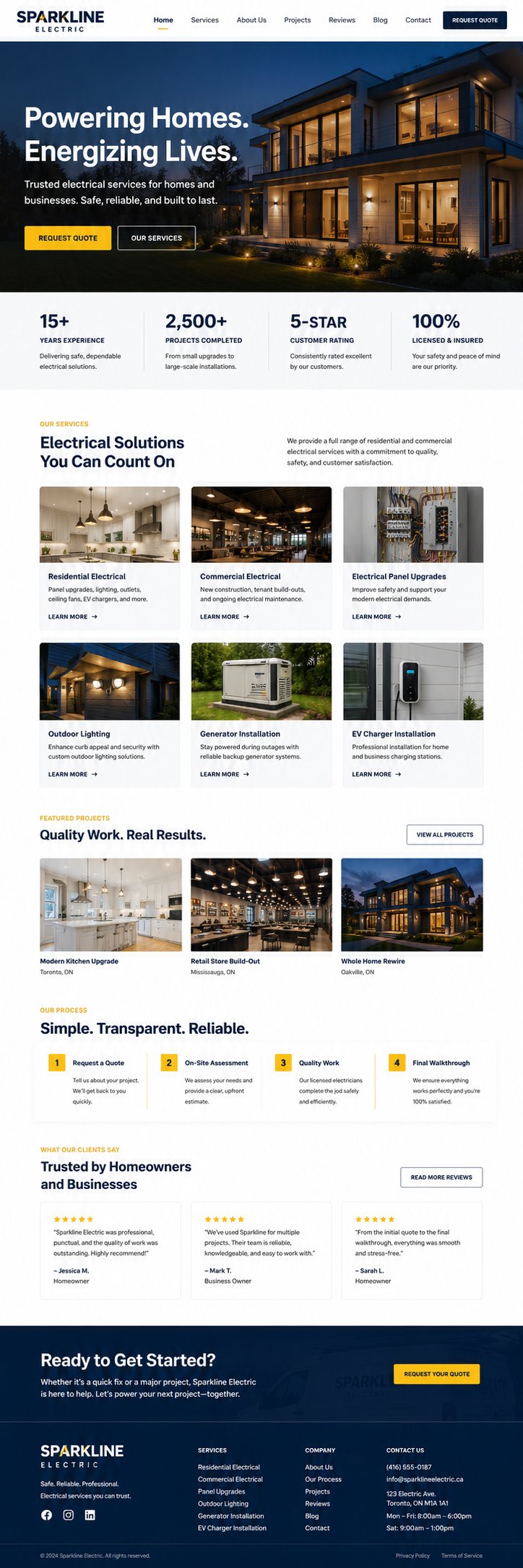
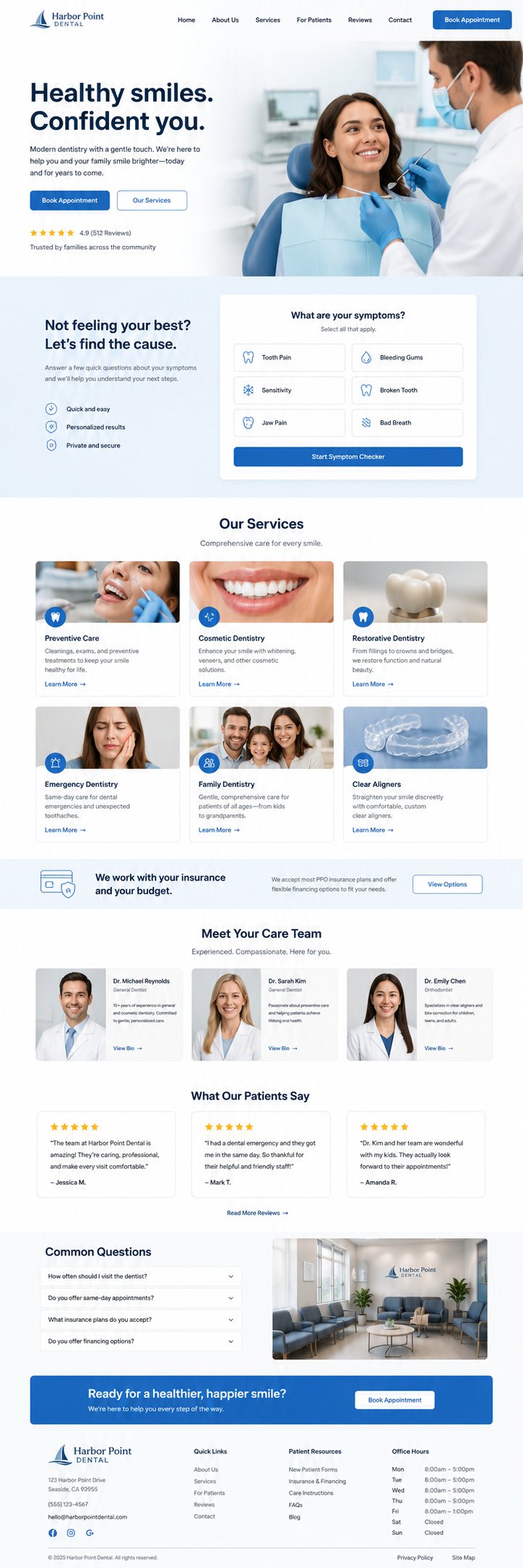
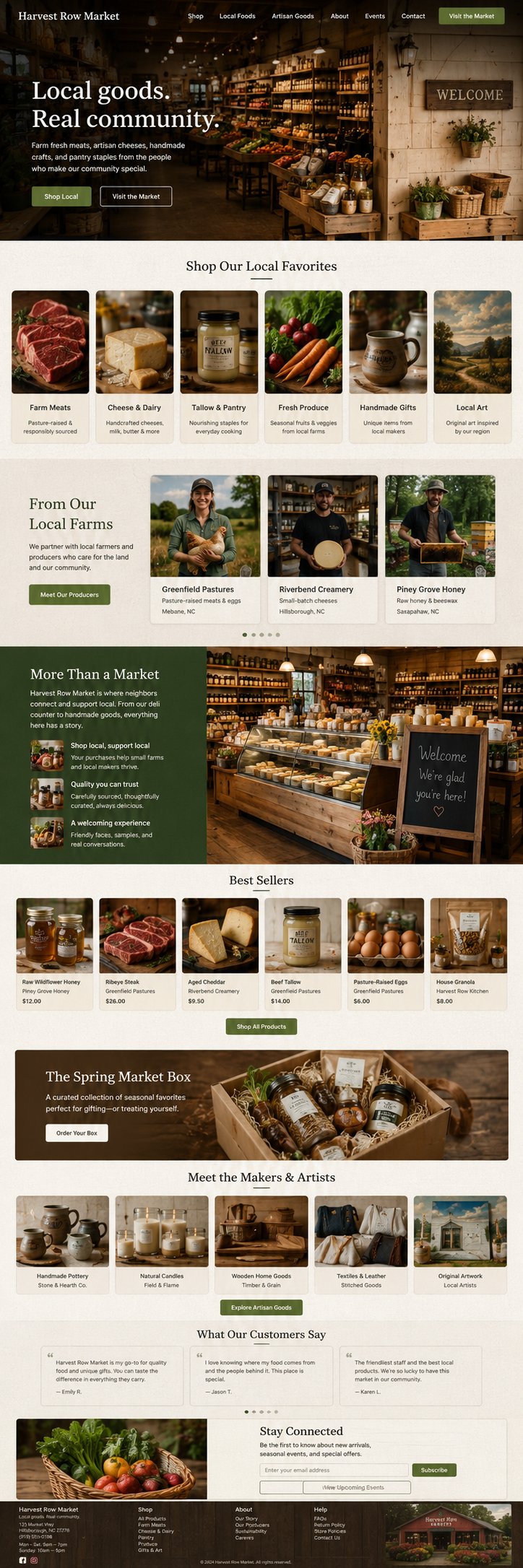
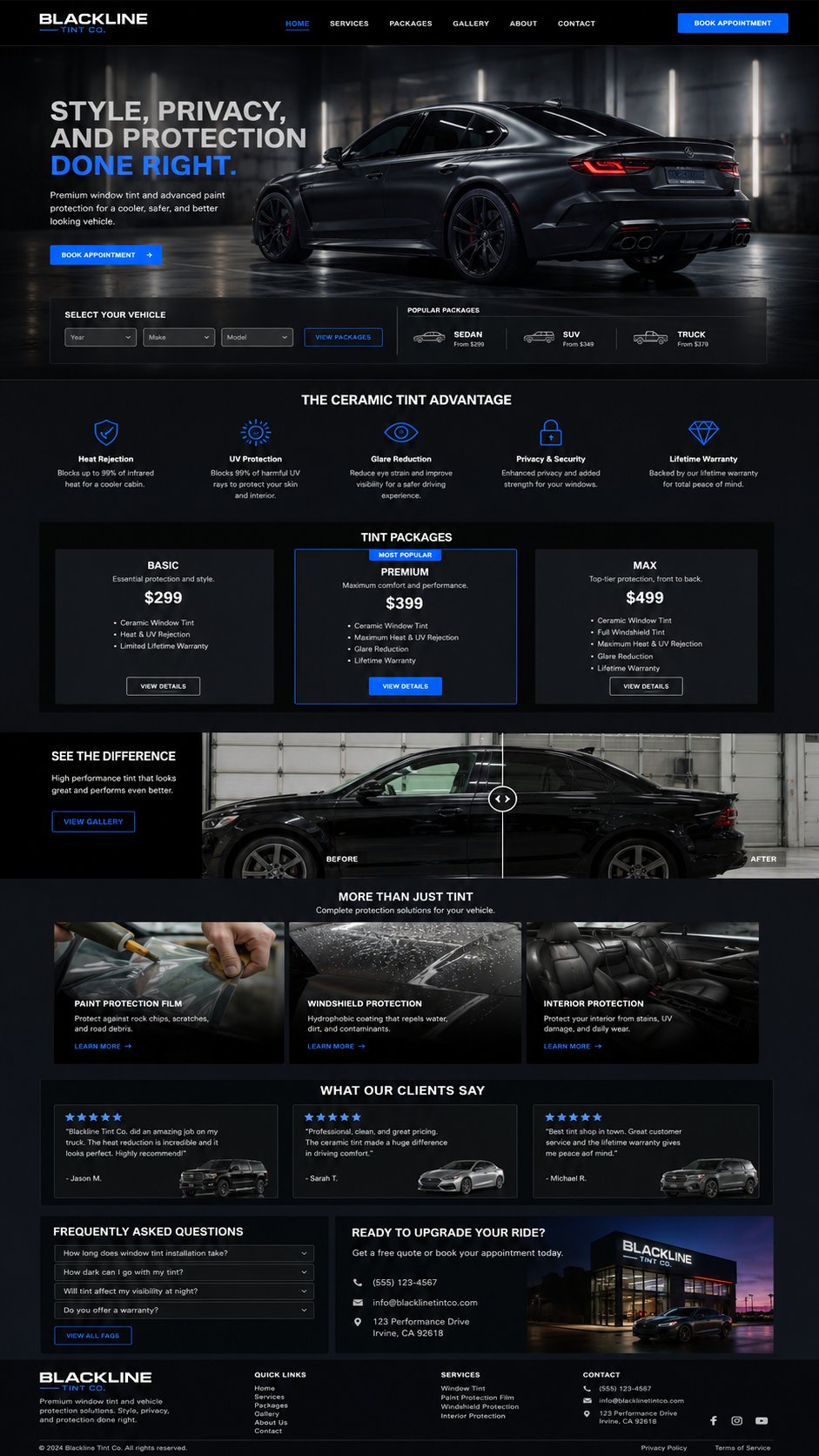
Design and development of small business websites, landing pages, and lead funnels built around clear offers, practical conversion paths, and the systems behind the business.
A quick look at the kind of sites this lane can turn into working systems.
Custom applications, dashboards, and internal tools designed around how your business runs and what your team needs to manage, track, or deliver.
Build automations, data pipelines, integrations, and AI-enabled systems that reduce repetitive work and create more useful infrastructure around your operations.
Website, CRM, automations, and integrations built and connected as one working system.
Final scope quoted per project
Real deliverables that teams can use, manage, and build from over time.
Better movement between systems, data, and operational handoffs.
Foundations that support AI adoption without creating disconnected complexity.
Tools and systems that save time, improve visibility, and support growth.
The process mirrors the framework above: define the business need, plan the system, design the experience, build the product, test performance, and deploy into real use.
Clarify requirements, business goals, and the systems that need to work together.
Map the architecture, user experience, data movement, and system relationships.
Shape the interface, workflow logic, and system design around the operational need.
Develop the website, app, dashboard, automation, or integration with real-world usability in mind.
Verify quality, performance, integrations, and security before launch.
Launch the system, support adoption, and keep improving as the business evolves.
If you need a website, app, dashboard, automation, or AI-enabled system built around how your business actually operates, let’s talk through the build.
Websites, dashboards, automations, and AI-ready systems built for practical business use.
The goal is not to build flashy AI features for their own sake. The goal is to build working systems that support how the business actually operates.
This work includes websites, apps, dashboards, client portals, automations, integrations, and AI-ready systems designed for real operational use.
The default approach is production-minded. We focus on useful systems that can be maintained, handed off, and expanded over time.
Yes. A major part of this work is connecting websites, CRMs, automations, dashboards, and internal tools so the business does not rely on disconnected systems.
If the team still needs clarity on AI priorities, start with Deployment Optimization. If the requirements are already clear and the system needs to be built, Development Optimization is the better fit.